 FR
FR Back to the website

The tertiary sector accounts for nearly half of France's energy consumption. To accelerate the energy transition, the BACS decree requires tertiary buildings to install smart systems capable of monitoring, controlling and optimising heating, ventilation and air conditioning equipment. This decree is a lever for improving energy efficiency and supporting tertiary sector players in reducing their carbon footprint. More than just a regulatory obligation, this decree represents a real opportunity.


Understanding the objectives and legal framework
The BACS decree is part of a broader regulatory framework that includes the Tertiary Decree and European directives on energy performance, with a direct link to the OPERAT platform for monitoring and compliance. This decree stems directly from Directive 2010/31/EU, reinforced by Directive (EU) 2018/844, which aims to generalize the integration of smart, energy-efficient technologies in buildings.
In France, Decree no. 2020-887 laid the foundations for the energy requirements, while Decree no. 2023-259 specified the terms and deadlines, including obligations linked to the provision of information via the OPERAT platform. The decree sets a minimum level corresponding to class C of the ISO 52120-1 standard, but aiming for class B or A can increase energy gains.
Identify the buildings concerned and plan ahead
The first step is to find out whether your buildings are affected by this energy and consumption reduction obligation, in order to define targets. From January 2025, the obligation will apply to HVAC installations of more than 290 kW, then in January 2027 to those of more than 70 kW. Certain exemptions exist, notably for buildings without HVAC or listed historic buildings, where reducing energy needs is less of a priority than other conservation objectives.
Once the scope has been defined, it is essential to plan the project in order to optimize the building's energy performance and achieve the objectives of performance and sustainable cost reduction. Anticipating these stages not only helps to secure deadlines, but also to make better use of the energy consumed and fully meet the objectives set.
Carry out an energy audit
An energy audit is the cornerstone of any approach to compliance with a high-performance BMS and efficient resource management. It's not just a question of measuring overall consumption, but of understanding how, when and why energy is used, in order to optimize management and adapt the solution to the building's technical context.
This analysis helps to identify wastage, assess the technical condition of air-conditioning systems and determine settings for sustainable, compliant management. The use of temperature, humidity or air quality sensors provides precise data that facilitates the design of customized control via the BMS, and enhances energy management while respecting technical specifications.
Choosing the right technical solution
The choice of a BMS (Building Management System) or BMS in the commercial sector must stem directly from the needs identified during the audit, particularly in terms of energy consumption and performance of the existing energy installation.
The solution chosen for a commercial building must be compatible with the existing installation, scalable, easy to use and capable of centralizing the control and management of all commercial systems to better control consumption. It must also collect and analyze data to optimize energy equipment and generate usable reports.
Rely on Nexelec sensors
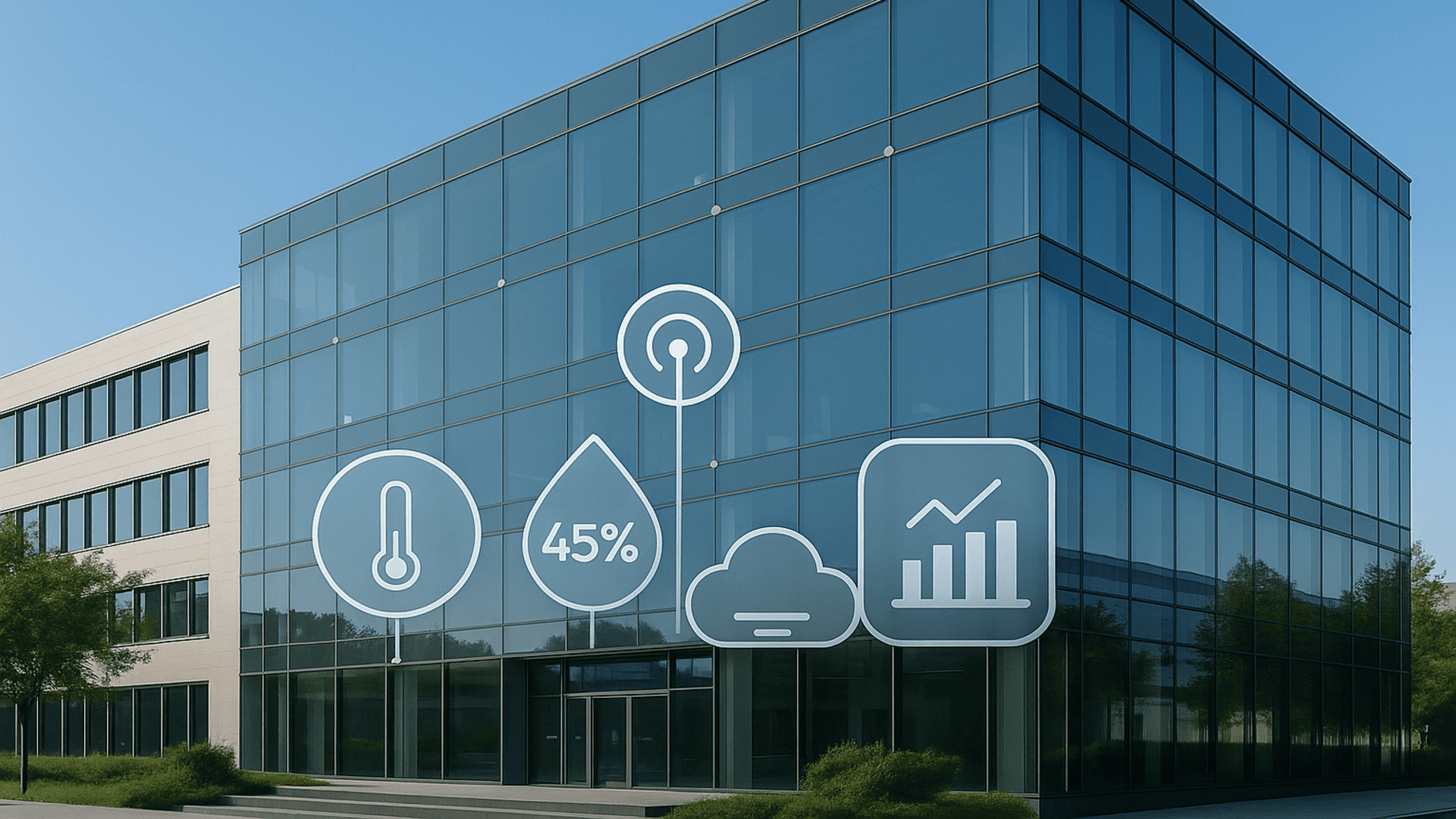
Data reliability is essential to comply with the BACS decree and guarantee the proper operation of the system in place. Nexelec sensors measure temperature, humidity and air quality in real time, providing a precise and continuous view of the building's interior condition to feed the monitoring system. Combined with a high-performance BMS, these sensors become a key element of the energy management system.
Training and maintaining performance
Training must enable them to master the interface, interpret the data and carry out annual preventive maintenance on the equipment, in line with the requirements of the BACS decree, in order to improve output and overall performance, and generate significant savings in commercial buildings. Regular performance monitoring is based on precise information and is then essential, year after year, to remain in line with the BACS decree, optimize plant output, maximize energy savings and ensure the sustainability of equipment and commercial buildings.
The data and information collected must be analyzed every year to quickly correct any drift, improve operational performance, guarantee the durability of equipment and maintain a high level of savings. Preventive maintenance relies on reliable information to extend the service life of commercial buildings, while meeting the performance and savings targets set by the BACS decree, year after year.
.svg)
